Blog · Cooking & recipes
CookingPersimmon bread season is short. Bake accordingly.
The short version: California persimmon season runs from mid to late September through December and peaks in October, so right now is the moment. My persimmon bread — ripe fruit, brown sugar, warm spices, walnuts on top — is how I use the season before it slips past. And the Fuyu vs. Hachiya thing matters more than any other step: one you can eat firm, the other will punish you for rushing it.
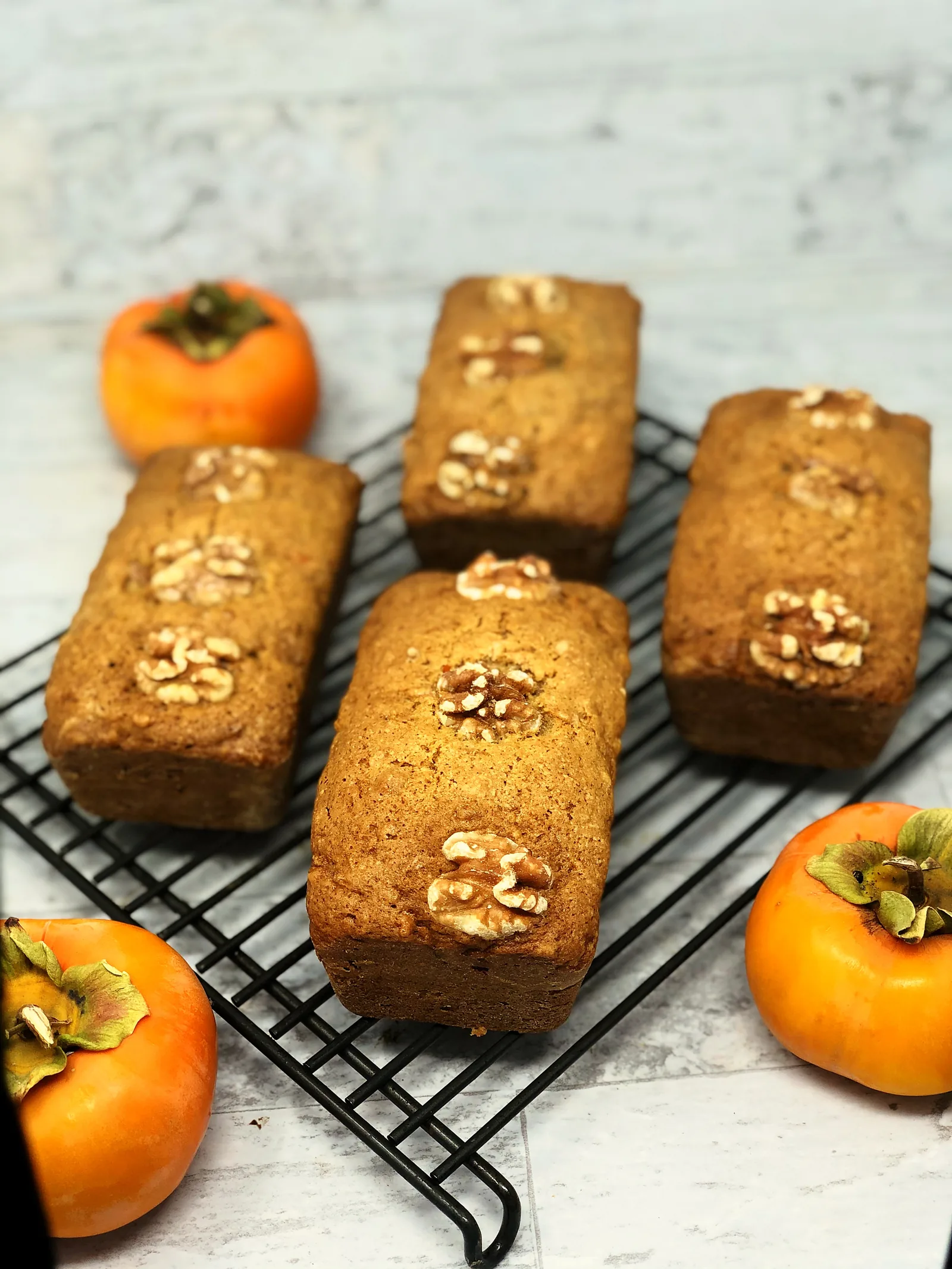
My latest batch, cooling on the rack. Yes, the walnuts on top are non-negotiable.
Persimmons do not hang around. For most of the year, nothing. Then October shows up and suddenly every farmers market table in San Diego has these glowing orange orbs stacked like they are trying to get your attention.
They are. The season is short — mid to late September through December, peaking right about now — and the fruit does not wait for you to get organized. So I bake.
Persimmon bread, specifically. It is the best use I know for fruit that has gone properly ripe: soft, sweet, and just past the point where you would slice it onto a plate. Add brown sugar and warm spices, fold it into a batter, and the whole kitchen smells like fall moved in. San Diego does not really do fall. We get about three rainy days and a lot of pretending. This bread is my pretending, and honestly? It works.
Fuyu or Hachiya? The one rule that actually matters
Most bad persimmon stories start the same way: somebody bit into a Hachiya too early.
Fuyu are the squat ones, shaped a bit like a tomato. They are friendly. You can eat a Fuyu while it is still firm and yellow-orange, sliced like an apple, and it will be sweet and crisp and cause zero drama.
Hachiya are the acorn-shaped ones, and they play by different rules. Until a Hachiya is completely soft — deep orange, almost jelly-like, about the texture of a water balloon — it is astringent in a way you will remember. Not "a little tart." More like your mouth has been vacuum-sealed. Wait for the softness. With baking, ripe Hachiya pulp is usually the move, because that softness disappears into the batter and leaves the sweetness behind.
So the rule is boring and absolute: ripe fruit only, and know which kind you are holding before you take a bite.
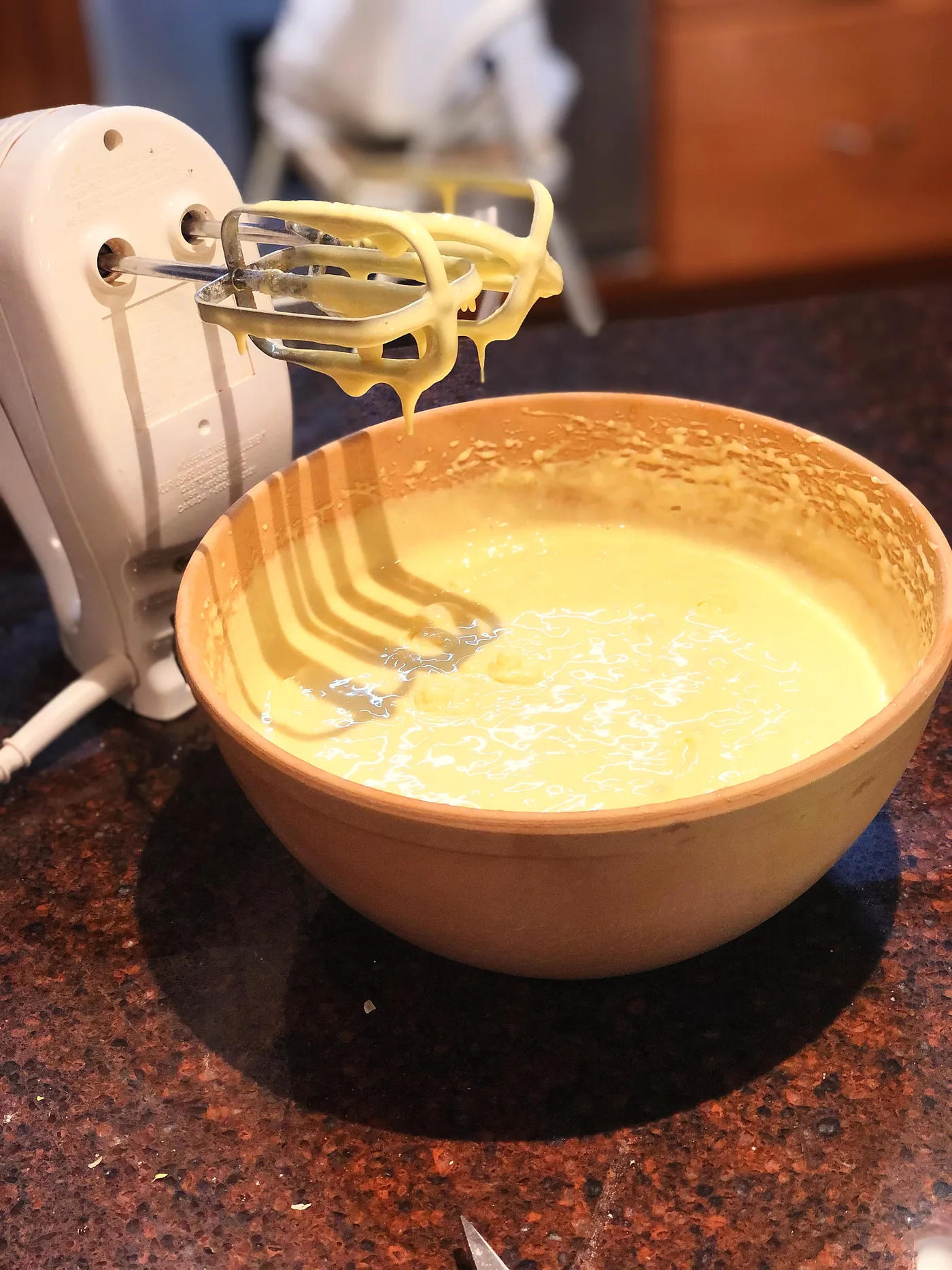
Batter stage. The beaters get licked. I will not be taking questions on this.
Three things this bake taught me
First: ripe persimmons only. I said it above and I will say it again, because underripe fruit does not get rescued by sugar or spice or optimism. It just makes a loaf you have to apologize for.
Second: do not skip the walnuts. They are not decoration. The bread itself is soft all the way through, and the walnuts on top are the one bit of crunch in every slice. Skip them and the whole thing reads a little flat.
Third — and this one is less a tip than a warning — a batch does not survive 24 hours in my kitchen. I made mini loaves this time, thinking smaller loaves would pace things out. Reader, they did not. Mini loaves are just loaves you can finish without technically cutting a slice, which turns out to be a loophole, not a portion strategy.
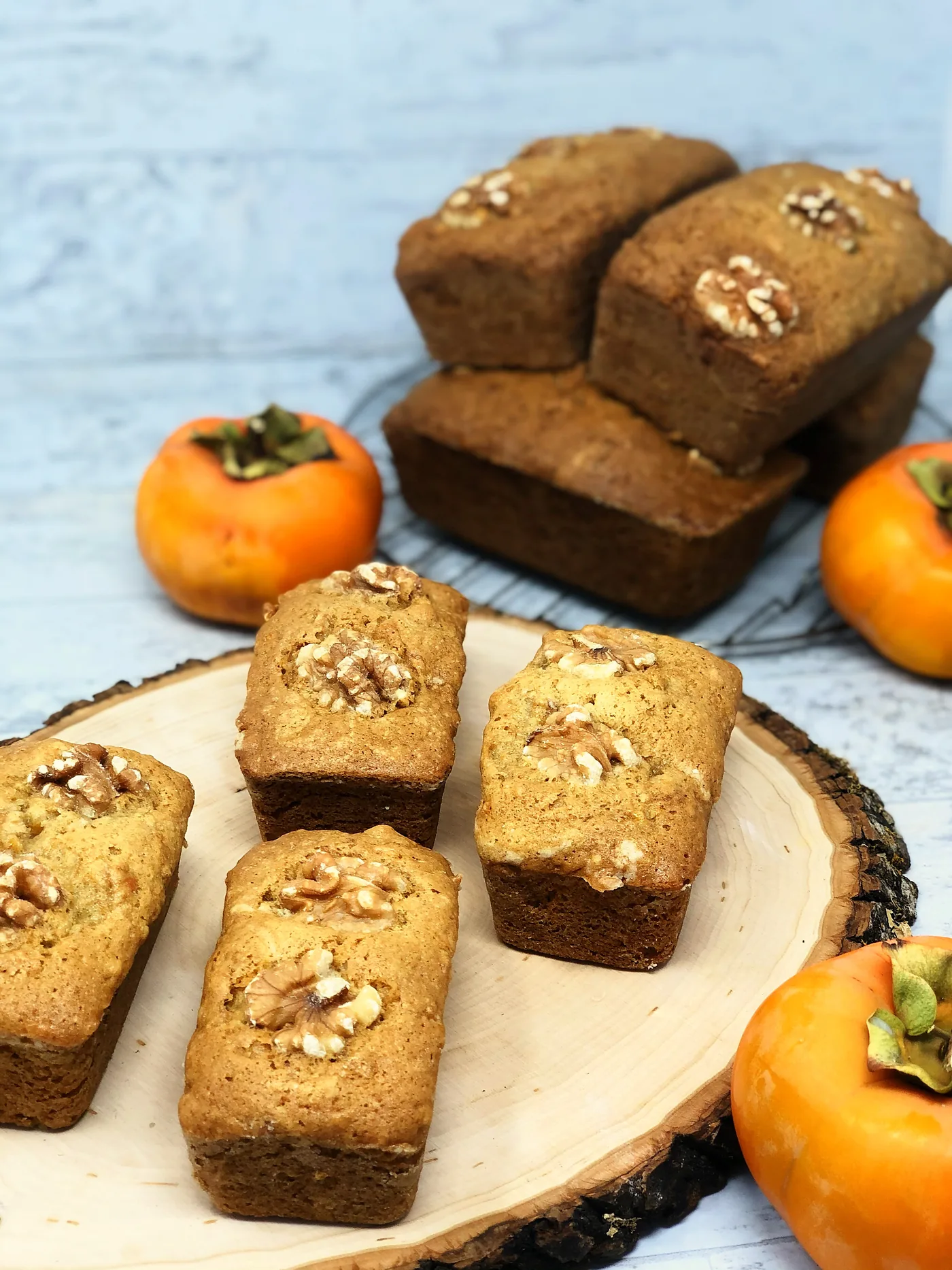
The board shot, taken quickly. History says this arrangement had about a day left to live.
Get them while October is still doing this
If you are in San Diego, this is a good week to wander a farmers market with no plan beyond "something orange." Buy more persimmons than you think you need. Eat the Fuyu firm, straight out of the bag on the walk back. Let the soft ones sit on the counter until they are ready, then bake.
The exact recipe card for my loaves lives in my DMs, same as always — comment RECIPE on the @chefshanu persimmon post and I will send it over. And if you bake a batch, I want a ruling: team Fuyu or team Hachiya? I have a position. It changes depending on which loaf is in front of me, but I have one.
While you are here — last week's kitchen obsession started at a restaurant table, not my oven. The Arroz Marinero at La Jollita in La Jolla is still living in my head rent-free.
Baking something good this fall? I post the experiments — wins and loopholes included — as @chefshanu.
Follow @chefshanu ↗Quick answers.
When is persimmon season in California?
California persimmon season runs from mid to late September through December, peaking in October, according to the Pacific Coast Farmers' Market Association (PCFMA).
What is the difference between Fuyu and Hachiya persimmons?
Fuyu persimmons are squat and can be eaten firm, like an apple. Hachiya persimmons are acorn-shaped and are astringent until they soften completely, so they are the ones most often used for baking once fully ripe.
How do you know when a Hachiya persimmon is ripe?
A ripe Hachiya is deep orange and very soft — the PCFMA compares the texture to a water balloon. If any part still feels firm, wait.
How long do persimmons keep?
Store persimmons at room temperature. Fuyu persimmons can keep for 2 to 3 weeks, while a ripe Hachiya only stays edible for about 2 to 3 days, according to the PCFMA.
Can I get the persimmon bread recipe?
Yes — the recipe card is shared by DM. Comment RECIPE on the @chefshanu persimmon bread post on Instagram and it will be sent to you.